
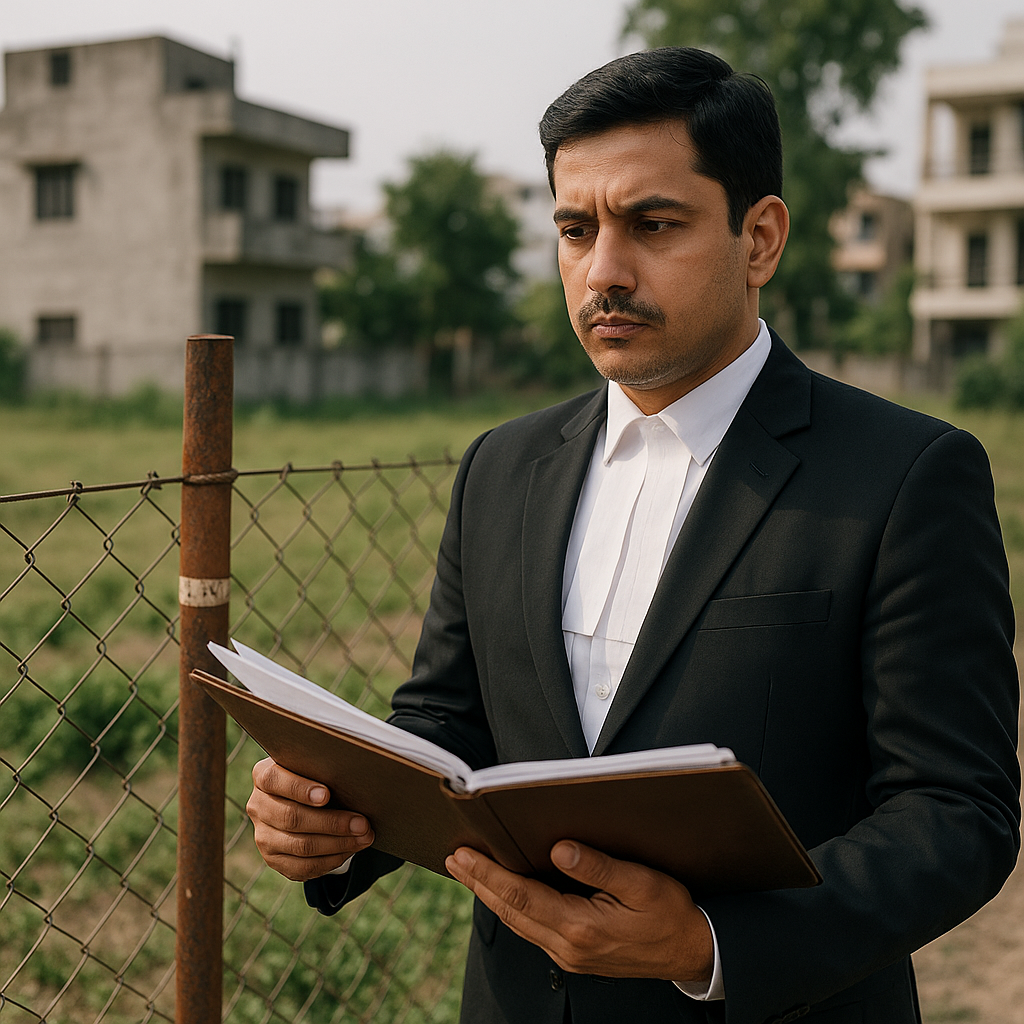
When Property Boundaries Spark Disputes: A Lawyer’s Perspective from Chandigarh
Property lines in Chandigarh aren’t just lines on a map. They can pull families into court, stall building projects for months, and even turn friendly neighbours into lifelong enemies. I’ve seen clients show up with faded sale deeds, torn maps, and more than once, a measuring tape in hand, swearing the wall is on their side. If you’re searching for help with property disputes Chandigarh, you’re probably already feeling the stress these fights create.
Boundary issues here rarely solve themselves. Chandigarh’s mix of old village records and newer planned sectors means confusion is common. One wrong assumption or missing document can cost lakhs, or worse, your peace of mind. That’s why understanding how property disputes start, how the law views them, and what steps a good property advocate follows matters so much. It’s not just about the land – it’s about clarity, rights, and sometimes, family legacy.
I’ve handled cases where two brothers built homes just a few feet apart, only to fight for years over a strip of land barely wide enough for a scooter. I’ve also seen developers and homebuyers clash over missing boundary pillars or incorrect site plans. Property disputes in Chandigarh can get technical, emotional, and expensive. But with the right approach, they’re not impossible to resolve.
Quick Answer: How Are Property Boundary Disputes Handled in Chandigarh?
Quick Answer: Property boundary disputes in Chandigarh are resolved through a mix of title verification, land record checks, site surveys, and legal proceedings. First, parties review sale deeds and revenue maps. If issues persist, a property advocate helps file a civil suit or request a survey by local authorities. Courts rely on documentary evidence and expert reports to decide the rightful boundary. Early legal advice and complete paperwork are critical for a quick, fair outcome.
Understanding Property Disputes in Chandigarh
Property disputes in Chandigarh often centre on unclear boundaries, old land records, or competing claims. These disputes can involve residential plots, agricultural land, or commercial spaces in sectors and villages alike.
What Triggers Boundary Issues?
Most boundary fights start small. Maybe a new wall goes up, a driveway appears, or a neighbour plants trees past the old fence line. In Chandigarh, triggers include:
- Overlapping or missing boundary pillars in sector plots
- Differences between revenue records and physical occupation
- Ambiguous sale deeds (especially in older villages like Mani Majra or Burail)
- Inheritance disputes after a family member passes away
- Errors in mutation or land registry entries
A property lawyer in Chandigarh usually starts with basic questions: Has the land been measured by the Revenue Department? Are the title documents updated? Is there a map (tatima) showing the site?
Types of Property Disputes
Boundary disputes are just one category. Other common property disputes in Chandigarh include:
- Title disputes: Conflicting ownership claims, often due to forged documents or unclear sales
- Encroachment: One party builds or occupies land beyond their legal boundary
- Partition disputes: Family members disagree over division of joint property
- Land use violations: Illegal construction or change of use (like turning residential plots into shops without approval)
Each type has its own legal path. But in every case, clear proof and timely action matter.
Why Chandigarh Is Unique
Chandigarh’s mix of planned sectors and older villages creates special challenges:
- Most sector plots have detailed layout plans, but encroachments or shifting pillars can still cause confusion.
- Village lands may lack updated records, with handwritten jamabandis (record of rights) and old boundary maps.
- The Chandigarh Administration has its own land rules, different from Punjab or Haryana, which can trip up even experienced property advocates.
So, a local property lawyer in Chandigarh who knows both city and village systems is a must. Honestly, I’ve seen out-of-town lawyers struggle with the paperwork here.
Legal Framework for Resolving Property Disputes in Chandigarh
Resolving property disputes in Chandigarh relies on a web of laws, government departments, and procedural steps. It’s not just about marching to court – there’s a process that must be followed.
Key Laws and Authorities
The main laws governing boundary and land disputes here are:
- Transfer of Property Act, 1882: Governs sale, transfer, and inheritance of property
- Indian Evidence Act, 1872: Sets rules for what documents and testimony count as proof
- Land Revenue Act (Punjab/Haryana as applicable): Deals with land records, surveys, and mutation
- Registration Act, 1908: Covers how sale deeds and other property documents are registered
Local authorities also play a big role:
- Estate Office, Chandigarh (for sector properties)
- Revenue Department (for village land, mutation, and jamabandi)
- Municipal Corporation (for building approvals, encroachment action)
- Survey Department (for physical measurement of land)
The Legal Resolution Process
A typical legal pathway for property boundary disputes looks like this:
- Title Verification: Collect and review all sale deeds, jamabandi, and site maps. A property advocate checks for chain of title and any missing links.
- Physical Survey: Request a site measurement by the Revenue or Survey Department. Sometimes, a court-appointed commissioner conducts this survey.
- Legal Notice: Send a formal notice to the other party, asking them to stop encroachment or correct the boundary.
- Filing a Civil Suit: If talks fail, file a suit for injunction (to stop construction or encroachment) or for declaration of rightful boundary.
- Court Proceedings: Both sides present evidence. The court may appoint a local commissioner for site inspection.
- Final Judgment: Based on documents, survey reports, and witness statements, the court decides the rightful boundary.
The Role of a Property Advocate
A good property advocate in Chandigarh does more than argue in court. They:
- Gather and verify all relevant documents
- Identify gaps in the title chain
- Liaise with revenue and municipal officials for surveys
- Draft strong legal notices and petitions
- Advise on possible settlements to avoid long litigation
I’d say don’t skip this step. Many boundary disputes drag on just because one party never got their paperwork in order or missed a key deadline.
The Importance of Title Verification and Land Records
Title verification is the backbone of any property dispute case in Chandigarh. If your documents are weak or missing, even the best [property lawyer in Chandigarh](https://sheokandlegal.com/rera-lawyers-in-chandigarh/) will struggle.
What Is Title Verification?
Title verification means checking every document in the property’s history to confirm clear, legal ownership. This includes:
- All sale deeds, gift deeds, or partition deeds
- Mutation entries (intkal) showing change of ownership
- Jamabandi (record of rights) for rural land
- Tatima (site map) showing boundaries
- Encumbrance certificate (shows mortgages or legal claims)
A real estate advocate will often go back 30 years, or even to the original allotment, to spot any missing links or forged documents.
Common Land Record Issues in Chandigarh
Even in a planned city, land records can have gaps:
- Older village lands may have hand-written jamabandis with unclear boundaries.
- Mutation entries sometimes miss one heir or reflect an old, cancelled sale.
- Sector plots may have site plans, but if the physical boundary pillars were moved, the map and ground reality won’t match.
Why Title Verification Matters
If you skip this step, you risk:
- Buying disputed land
- Getting stuck in long property litigation
- Trouble selling or mortgaging the property later
A property advocate usually insists on a full title check before filing any court case. It’s not just legal formality – it’s your safety net.
Common Mistakes and Misconceptions in Boundary Disputes
People often walk into my office convinced the law is on their side, only to be surprised by what the records show. Property disputes in Chandigarh are full of avoidable mistakes.
Misreading Maps and Sale Deeds
Many owners rely on old site plans or hearsay (“my father said this was our line”). But:
- Maps must match actual ground measurements.
- Sale deeds should clearly describe boundaries, not just “north: road, south: neighbour”.
- Physical features (like trees or walls) might not be legal boundaries.
A property lawyer in Chandigarh will always insist on matching documents with site reality.
Ignoring Mutation and Revenue Records
It’s common to skip updating mutation after a sale or inheritance. But without proper mutation, you can’t prove ownership in court. Many fights drag on because of this paperwork gap.
Delaying Legal Action
Waiting too long to send a legal notice or file a suit can weaken your case. If the other party finishes construction or plants evidence of long-term possession, courts may hesitate to order demolition or removal.
Trusting Verbal Agreements
Some families settle boundaries “by word of mouth” or with informal notes. These rarely hold up in court. Always get written, registered agreements.
Underestimating the Cost and Time
Property litigation in Chandigarh isn’t cheap or quick. Court fees, survey costs, and lawyer’s charges can add up. Most cases take months, often years, to resolve.
Best Practices: How to Prevent and Resolve Property Disputes
Avoiding a property dispute is always better than fighting one. Here’s what I’d recommend to anyone dealing with property boundaries in Chandigarh.
Preventive Steps Before Buying or Building
- Get full title verification from a property advocate before purchase
- Compare site maps with actual ground measurement
- Check mutation entries are up-to-date in revenue records
- Ask neighbours about any old disputes or encroachments
- Register all agreements (sale, partition, family settlement) with the Sub-Registrar
Steps During a Dispute
- Document Everything: Photos, videos, and written records of the disputed area
- Gather All Papers: Sale deeds, jamabandi, old maps, mutation orders
- Consult a Property Lawyer in Chandigarh: Don’t rely on general advice or online templates
- Request a Survey: Get a fresh measurement from the local authority
- Try Negotiation: Sometimes, a written settlement can save years of litigation
- File a Suit Only When Needed: Court cases should be a last resort, not the first step
Working with a Real Estate Advocate
A real estate advocate can:
- Advise you on the strength of your case
- Handle paperwork and filings
- Represent you during site surveys and in court
- Suggest alternative dispute resolution (mediation, arbitration) if possible
Settling Out of Court
Many property disputes in Chandigarh settle through compromise. A written, registered settlement agreement, signed by both parties and witnessed, is legally binding and often quicker than court.
The Litigation Process: What to Expect in Chandigarh Courts
Litigation is sometimes unavoidable. Here’s a look at what actually happens once you file a property dispute case in Chandigarh.
Filing the Suit
The process starts with drafting a civil suit, usually for injunction (to stop encroachment) or declaration (to fix boundaries). Your property advocate will include:
- Details of the property and boundaries
- List of all relevant documents
- Description of the dispute and relief sought
The Court’s Approach
Chandigarh courts expect:
- Complete documentary evidence (sale deeds, mutation, maps)
- Proof of physical possession (photos, witnesses)
- Survey reports from the local commissioner or Revenue Department
The court may order a local commissioner (usually a senior lawyer or surveyor) to visit the site, measure boundaries, and submit a report.
Evidence and Arguments
Both sides present:
- Documentary evidence (registered documents, land records)
- Witness testimony (neighbours, surveyors, officials)
- Expert reports (site survey, measurements)
Cross-examination is common. Courts are strict about forged or altered documents.
Timeline and Costs
Property litigation in Chandigarh can take from 1 – 3 years, sometimes longer if appealed. Costs include:
- Court fees (calculated on property value)
- Advocate’s fees (varies by complexity)
- Survey and commission charges
- Miscellaneous expenses (notices, photocopies, stamp paper)
It’s not a quick fix. But with clear documents and a good legal team, you can expect a fair outcome.
The Role of Survey, Mutation, and Revenue Records
Survey reports, mutation entries, and jamabandi play a central role in resolving property disputes in Chandigarh. These documents act as the backbone for court decisions.
Survey and Demarcation
A survey is a physical measurement of the property, usually ordered by the court and conducted by a local commissioner or government surveyor. The process involves:
- Measuring boundaries as per sale deed and site map
- Placing or checking boundary pillars
- Noting encroachments or overlaps
- Preparing a detailed report with sketches and photos
Courts rely heavily on these reports, especially when documentary evidence is unclear.
Mutation (Intkal)
Mutation is the official process of recording a change in ownership in revenue records. Without mutation, even a registered sale deed may not be enough to prove ownership in court.
Steps in mutation:
- Submit application with sale deed or inheritance documents
- Revenue official verifies claim and inspects site
- Notice issued to all interested parties
- Mutation order passed and entered in jamabandi
A property advocate will often check mutation entries for errors or missing names.
The Jamabandi
Jamabandi is the record of rights for rural land. It lists owners, cultivators, area, and boundaries. In Chandigarh’s villages, jamabandi is the primary proof of ownership.
Common issues with jamabandi:
- Outdated entries
- Incomplete or missing boundary descriptions
- Errors in area or owner names
Courts may summon revenue officials to clarify or update jamabandi during a dispute.
Title Verification: How to Do It Right in Chandigarh
Title verification is not just a formality. It’s a detailed, step-by-step process that can make or break your case.
Step-by-Step Title Verification
- Collect all sale deeds, gift deeds, and partition deeds going back at least 30 years
- Check mutation entries for each transfer of ownership
- Obtain jamabandi for rural land or allotment letter for sector plots
- Get the latest site map (tatima) from the revenue office
- Look for encumbrances (loans, court cases, government acquisitions)
- Physically inspect the property to match documents with ground reality
Common Pitfalls
- Relying on photocopies or unregistered documents
- Missing mutation after inheritance or sale
- Overlooking government notifications (like land acquisition)
- Ignoring ongoing litigation or stay orders
A property lawyer in Chandigarh will usually run a full background check before advising you to buy, sell, or file a court case.
Trends and Recent Developments in Chandigarh Property Disputes
The property dispute scene in Chandigarh is changing fast. Digital land records, stricter building codes, and rising property values are all shaping how disputes start and end.
Digitalisation of Land Records
Chandigarh Administration is moving towards full digitisation of land records. Online jamabandi, mutation status, and maps are now available for many areas. This has:
- Reduced forgery and manipulation
- Made title verification quicker
- Helped buyers spot encumbrances before purchase
Still, many old records and village lands remain offline, so manual checks are often needed.
Stricter Building and Encroachment Rules
The Municipal Corporation and Estate Office have started cracking down on illegal constructions and encroachments. Notices, demolitions, and heavy fines are more common now, especially in high-value areas like Sector 8, 9, and 10.
Rise in Mediation and Alternative Dispute Resolution
Courts in Chandigarh now encourage mediation before full-scale litigation. Many property advocates recommend trying mediation or arbitration to save time and money. Settlements reached through mediation are legally binding if recorded in writing.
Increased Due Diligence by Lenders
Banks and NBFCs have tightened their scrutiny before granting property loans. They require full title verification, updated mutation, and clear survey reports before sanctioning any loan against property.
Frequently Asked Questions
What is a property boundary dispute?
A property boundary dispute occurs when two or more parties disagree on the exact dividing line between their properties. It often involves overlapping claims, unclear documents, or physical encroachment.
How can I resolve a property dispute in Chandigarh?
Resolving a property dispute in Chandigarh usually involves verifying title documents, getting a site survey, sending a legal notice, and, if needed, filing a civil suit. Consulting a property advocate is essential for proper guidance.
What documents are needed to prove property ownership in Chandigarh?
You’ll need sale deeds, mutation entries, jamabandi (for village land), site maps, and any encumbrance certificates. Courts prefer registered and up-to-date documents.
What is mutation, and why is it important?
Mutation is the process of updating revenue records to reflect a new owner after sale, gift, or inheritance. Without mutation, you can’t fully prove ownership or sell the property.
How long does property litigation take in Chandigarh?
A typical property dispute case in Chandigarh takes 1 – 3 years, depending on complexity and appeals. Delays are common if documents are missing or parties don’t cooperate.
What is a title verification, and how is it done?
Title verification checks the legal chain of ownership for a property. It involves reviewing all sale deeds, mutation records, site maps, and searching for encumbrances. A property advocate handles this process.
Can I settle a property dispute out of court?
Yes, most property disputes in Chandigarh can be settled out of court through written agreements, mediation, or arbitration. A registered settlement is legally binding.
What is the role of a property advocate in a boundary dispute?
A property advocate reviews documents, files legal notices, represents you in court, and coordinates with surveyors and revenue officials. They guide you through every legal step.
How can I check if a property is disputed?
Ask for all title documents, mutation entries, and jamabandi. Search for ongoing court cases or encumbrances. A property advocate or real estate advocate can run a background check.
What is a local commissioner’s report?
It’s a site survey ordered by the court, done by a senior lawyer or surveyor. The report includes measurements, photos, and notes on encroachments, and is key evidence in court.
What are common mistakes in property disputes?
Mistakes include relying on oral agreements, ignoring mutation, using old or unclear maps, and delaying legal action. Always consult a property lawyer in Chandigarh early.
How do I apply for mutation in Chandigarh?
Submit a written application with supporting documents (sale deed, inheritance proof) at the revenue office. The official will verify, issue notices, and update records if approved.
Which authority handles property disputes in Chandigarh?
Civil courts handle most property disputes. For sector properties, the Estate Office or Municipal Corporation may also be involved in encroachment or building violations.
What are the legal fees for a property dispute case?
Fees include court fees (based on property value), advocate’s charges, survey expenses, and documentation costs. Expect anywhere from Rs 30,000 to several lakhs, depending on complexity.
How do I prevent property boundary disputes?
- Get title verification before buying
- Compare physical boundaries with site maps
- Update mutation promptly
- Register all agreements
- Consult a property advocate when in doubt
Key Takeaways
- Property disputes in Chandigarh often arise from unclear boundaries, outdated records, or missing documents.
- Title verification and updated mutation are essential before buying, selling, or litigating property.
- A property advocate plays a vital role in gathering evidence, filing suits, and negotiating settlements.
- Physical surveys and local commissioner reports are key in court decisions on boundary issues.
- Many disputes can be settled out of court through written, registered agreements.
- Digital land records are reducing forgery and speeding up due diligence, but manual checks remain necessary.
- Ignoring mutation or relying on verbal agreements weakens your legal position.
- Litigation is costly and time-consuming; prevention and early action save money and stress.
- Chandigarh’s property laws and authorities differ from those in Punjab and Haryana, so local expertise matters.
- Courts expect complete, original documents and strong evidence; shortcuts rarely work.
Conclusion
Property disputes in Chandigarh are rarely simple. The mix of old village records and modern sector layouts means you can’t afford to leave anything to chance. Whether you’re a buyer, seller, or just trying to protect your family’s land, careful title verification and timely legal advice can save years of trouble.
If you’re facing a boundary issue or any property dispute, don’t wait for it to spiral out of control. A clear understanding of documents, laws, and process is your best ally. In Chandigarh, a little caution goes a long way toward peace of mind.
