
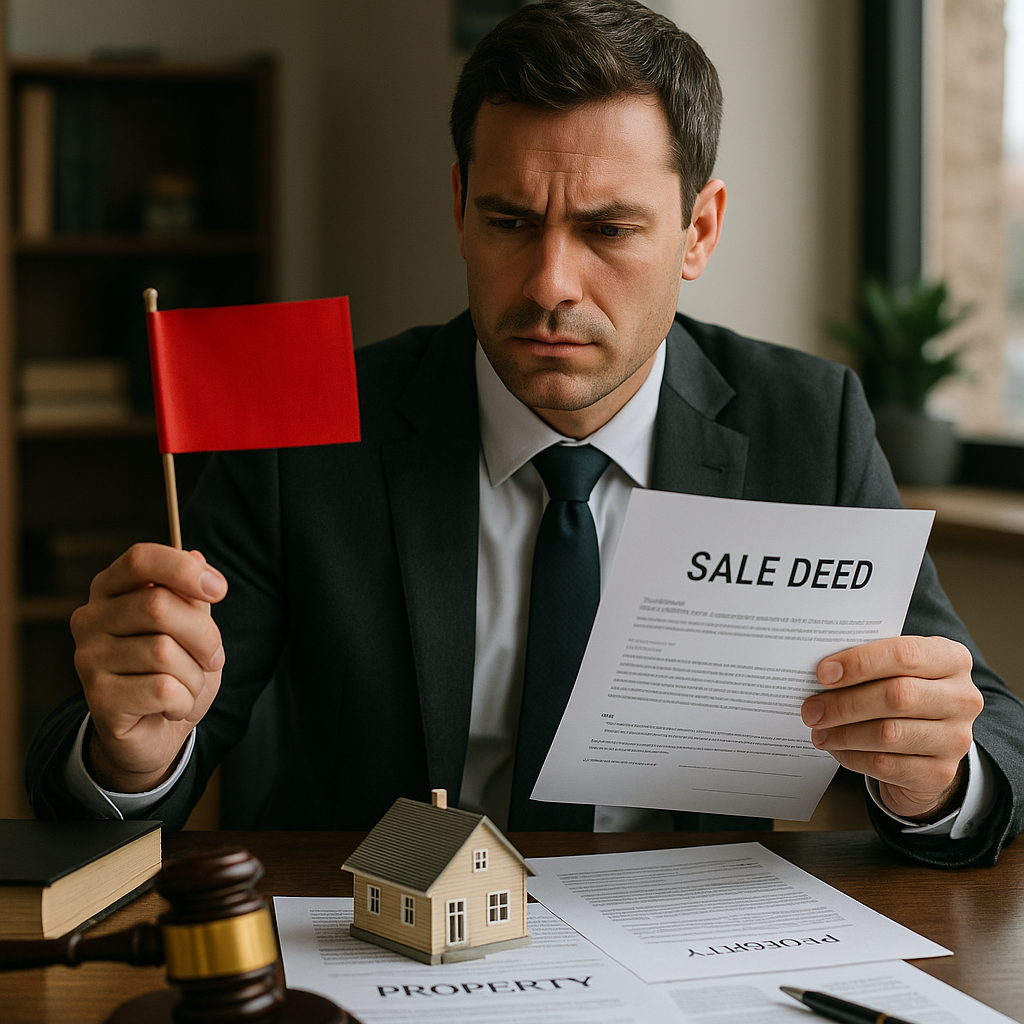
Why Property Fraud Red Flags Are Easy to Miss
Last January, a young IT couple in Bengaluru lost their life savings after buying a flat that looked perfect on paper. The seller handed over glossy brochures, promised RERA Compliance, and even arranged a quick site visit. But six months later, the couple received a court notice: the property was entangled in a Sale Deed Dispute with multiple claimants. They never saw it coming.
Property fraud isn’t just about fake documents or obvious scams. Many buyers, especially first-timers, overlook subtle legal red flags. India’s property market is full of complex paperwork, old laws, and evolving government rules. Missing a single step can cost you years of litigation or even your home. Understanding property fraud red flags isn’t just smart – it’s essential to protect your investment and your peace of mind.
Even experienced investors sometimes get blindsided. Legal loopholes, outdated records, and clever forgeries can fool anyone. If you’re not careful, you might pay for a property you never truly own. Let’s break down the warning signs, real cases, and what a good Property Fraud Lawyer actually looks for.
Quick Answer: What Are the Top Property Fraud Red Flags?
Quick Answer: The main property fraud red flags include missing or forged Property Documentation, unclear ownership history, Sale Deed Disputes, lack of RERA Compliance, and pressure to skip legal review. Always verify title, check for legal notices, and consult a Real Estate Lawyer before finalising any deal.
Understanding Property Fraud Red Flags in Indian Real Estate
Property fraud red flags in India cover more than forged signatures or fake IDs. The most dangerous signs are often hidden in paperwork, rushed timelines, and gaps in government records. Recognising these can save you from years of Real Estate Disputes.
What Makes a Red Flag?
A red flag is any sign that something about the property or transaction is off. Sometimes it’s a missing stamp, sometimes a seller who’s too eager. Here’s what usually stands out:
- Unclear title chain: If ownership documents skip generations or have unexplained gaps, that’s risky.
- Forged or duplicate documents: Look for mismatched signatures, changed pages, or government seals that look odd.
- Pending litigation: If there’s an ongoing court case, even if the seller claims it’s minor, don’t ignore it.
- Sale Deed Disputes: Disagreements over the sale deed wording or registration are a big warning.
- No RERA registration: For new projects, lack of RERA Compliance is a legal and financial risk.
Real-World Examples
Take the 2019 Mumbai case where four buyers paid for the same flat. All had “original” sale deeds, but only one was registered. The rest were forged copies. The buyers spent years fighting in court, and none got possession.
In Hyderabad, a builder sold land that was under government acquisition. The buyers trusted the notarised documents, but the land was never theirs to begin with.
Why Buyers Miss These Signs
- Too much trust in brokers or word-of-mouth
- Rushing paperwork to lock in a “good deal”
- Not hiring a Property Fraud Lawyer due to cost worries
- Assuming digital records are always accurate
Honestly, most buyers think if the property looks modern or the seller is well-spoken, it must be safe. That’s rarely true without proper checks.
The Most Common Property Fraud Red Flags and What They Mean
Most people focus on big scams, but smaller legal warning signs are far more common and dangerous. Here’s what to watch out for:
Title Issues and Ownership Gaps
A clean title is the backbone of any property deal. If the ownership history is murky, you might be buying someone else’s headache.
- Missing links: If the property changed hands several times but one transfer isn’t recorded, it’s a problem.
- Unregistered transfers: Gifts, inheritances, or sales without proper registration can invalidate your rights.
- Multiple claims: If more than one person claims to own the property, walk away.
Forged or Tampered Documents
Forgery isn’t always easy to spot. Sometimes it’s a missing watermark, sometimes the font is different on one page. Specific signs include:
- Different ink or handwriting in one document
- Stamps or seals that look faded or out of place
- Government records that don’t match the paperwork you’re shown
Pending Legal Disputes
Ongoing Real Estate Disputes can freeze your investment for years. Always check:
- The Encumbrance Certificate for any registered disputes
- Local court records for pending cases
- Notices published in newspapers about the property
Sale Deed Disputes
A sale deed is your proof of ownership. If there’s any disagreement about its terms, or if it isn’t registered properly, you’re at risk.
- Unregistered sale deed: No matter what the seller says, an unregistered deed is not legally valid.
- Ambiguous clauses: Vague terms about payment, possession, or boundaries are a big red flag.
RERA Compliance Issues
For new projects, RERA registration is non-negotiable. If the builder can’t show you a valid RERA number, don’t proceed.
- RERA details should match the project and builder exactly
- Lack of RERA means no regulatory protection if things go wrong
How Property Documentation Can Hide or Reveal Fraud
Property Documentation is the single most important shield against fraud. But it’s also the place where most tricks happen. Understanding what to look for (and what’s easy to fake) is crucial.
Key Documents Every Buyer Must Check
- Title Deed: Confirms ownership. Must be original, registered, and unbroken in history.
- Sale Deed: The actual transfer document. Needs to be stamped and registered with the local sub-registrar.
- Encumbrance Certificate: Shows any legal or financial liabilities – like loans or court cases – on the property.
- Khata/Patta/Mutation Certificate: Local municipal record showing property tax status and changes in ownership.
- Building Plan Approval & Occupancy Certificate: For flats and new homes, these prove legal construction and permission to occupy.
- RERA Registration Certificate: Mandatory for new projects since 2016.
What to Watch for in Documents
- Faded, torn, or obviously altered pages
- Mismatched names or addresses
- Handwritten changes or corrections
- Missing government stamps or signatures
Digital vs Physical Records
Many states now offer digital property records. While they’re useful, digital records are not always updated in real time. Always cross-check with physical documents and visit the sub-registrar’s office if in doubt.
The Role of a Real Estate Lawyer
A good Real Estate Lawyer won’t just glance at your paperwork. They’ll:
- Compare physical and digital records
- Check for hidden liens or mortgages
- Verify builder approvals and RERA status
- Flag any missing or suspicious entries
If your lawyer raises even a small concern, don’t ignore it. It’s easier to walk away than fight a Property Dispute Lawyer in court for years.
Sale Deed Disputes: The Hidden Trap in Indian Property Deals
Sale Deed Disputes are one of the most common causes of lost money and endless litigation. Even experienced investors can get caught if they’re not careful.
What Exactly Is a Sale Deed Dispute?
A Sale Deed records the transfer of property from seller to buyer. Disputes often arise when:
- The deed is not registered, or registration is incomplete
- Terms are unclear, especially about payment, possession date, or property boundaries
- The same property is sold to multiple buyers with overlapping deeds
Famous Cases and Their Lessons
- In Chennai, a builder used a single sale deed to sell the same land to three families. All had registered papers, but only one was considered valid by the court because of the registration date.
- In Pune, a missing page in the sale deed led to a ten-year court battle over a single word (“exclusive” vs “shared” parking rights).
How to Avoid Sale Deed Disputes
- Always insist on a fully registered sale deed, never just a notarised agreement.
- Double-check the property description, boundaries, and consideration amount.
- Cross-verify with the sub-registrar’s office for any overlapping or duplicate deeds.
If you spot even one ambiguity, ask for Property Legal Advice before signing anything. It’s not worth the risk.
RERA Compliance: Why It Matters More Than You Think
RERA (Real Estate Regulatory Authority) was introduced to bring transparency and protect homebuyer rights. But many buyers still fall for non-compliant projects, thinking it’s just another layer of paperwork.
What Is RERA Compliance?
RERA requires all new real estate projects (above a certain size) to be registered. Builders must:
- Disclose project details, approvals, and timelines
- Update progress regularly
- Hold funds in escrow to prevent diversion
If your project isn’t RERA registered, you lose access to these safeguards.
How Lack of RERA Compliance Leads to Fraud
- Builders can sell the same unit to multiple buyers
- Project delays with no compensation
- No recourse if the builder disappears or changes plans
Checking RERA Status
Every state has a RERA website. Search for your project and builder. If details don’t match or the project isn’t listed, that’s a serious red flag.
RERA vs Non-RERA Projects: A Quick Table
| Feature | RERA-Compliant | Non-RERA Project |
|---|---|---|
| Registration | Mandatory | Not required |
| Buyer Protection | Yes | No |
| Escrow Account | Yes | No |
| Regular Updates | Yes | No |
| Penalty for Delay | Yes | No |
Real Estate Disputes and Litigation: What Buyers Often Miss
Many buyers think that once they have the keys, all is settled. In reality, property disputes can erupt months or even years later.
Types of Real Estate Disputes
- Boundary disputes: Confusion over physical limits of the property
- Title disputes: Competing claims by heirs, previous owners, or third parties
- Builder-buyer disputes: Delays, changes in layout, or missing amenities
- Society disputes: Issues with property associations or maintenance bodies
How Disputes Start
- Overlapping survey numbers
- Fake or duplicate documents
- Unclear succession (especially with inherited property)
- Unpaid dues or taxes
How a Property Dispute Lawyer Can Help
A Property Dispute Lawyer will:
- Scrutinise all documents for legal loopholes
- Check municipal and court records for past or ongoing cases
- Mediate or represent you in negotiations and court
Honestly, it’s tempting to skip a lawyer to save money. But if a dispute arises, you’ll spend much more on fees and lost time.
Best Practices: How to Avoid Property Fraud Red Flags
Avoiding property fraud isn’t about being paranoid. It’s about being thorough, patient, and a bit sceptical. Here’s what experienced buyers and Property Fraud Lawyers recommend.
Step-by-Step Process for Safe Buying
- Hire a Real Estate Lawyer: Don’t rely on the seller’s agent or a broker.
- Verify Documents: Check originals, compare with digital records, and ask for certified copies.
- Check RERA Compliance: Visit the official state RERA portal and confirm the registration.
- Visit the Property: Don’t skip a physical inspection. Talk to neighbours if possible.
- Review Sale Deed Draft: Go through every clause, especially about payment and possession.
- Search Court Records: Look for pending cases at district and high court levels.
- Ask for Property Legal Advice: If anything feels off, pause and consult an expert.
- Register the Deed Yourself: Attend the registration in person, don’t send a proxy.
Extra Tips from Seasoned Buyers
- Never pay large sums in cash
- Avoid deals that sound “too urgent” or “one-time only”
- Don’t trust only digital copies – always see the original
- Watch for power of attorney sales, especially if the owner is overseas
Common Mistakes to Avoid
- Skipping legal review to save time or money
- Trusting word-of-mouth or WhatsApp forwards
- Ignoring small discrepancies in names or addresses
- Not checking for unpaid dues or pending taxes
Frequently Asked Questions
What are the top property fraud red flags in India?
The main red flags include unclear title history, forged Property Documentation, pending Sale Deed Disputes, lack of RERA Compliance, and sellers pressuring you to skip legal checks. Always verify all documents and consult a Real Estate Lawyer.
How can I check if a property is involved in any legal dispute?
Check the Encumbrance Certificate, visit the local sub-registrar’s office, and search for court cases related to the property. Also, look for legal notices in newspapers and ask the local municipal office for any pending issues.
What is RERA Compliance and why is it important?
RERA Compliance means the project is registered with the state Real Estate Regulatory Authority. This protects buyers by ensuring transparency, regular updates, and mandatory escrow accounts to prevent misuse of funds.
How do I verify the authenticity of property documents?
Always ask for original documents, cross-check with government records, and compare details with digital databases. Look out for mismatched names, missing stamps, or altered pages. Consulting a Property Fraud Lawyer is the safest approach.
What should I do if the seller is using a power of attorney?
Verify the validity of the power of attorney and confirm it hasn’t been revoked. Ensure it is registered and specific for the sale purpose. If possible, meet the original owner and consult a Property Legal Advice expert.
How can I avoid Sale Deed Disputes?
Insist on a registered sale deed, check every clause for clarity, and ensure the property description matches reality. Always attend the registration in person and never rely solely on notarised agreements.
What documents are mandatory for property purchase in India?
The key documents are Title Deed, Sale Deed, Encumbrance Certificate, Khata/Patta/Mutation Certificate, Building Plan Approval, Occupancy Certificate, and RERA Registration Certificate for new projects.
Can I trust only digital property records?
No, digital records may not always be up to date. Always cross-verify with physical documents at the sub-registrar’s office and seek certified copies if in doubt.
What is the role of a Property Fraud Lawyer?
A Property Fraud Lawyer checks all documents, verifies ownership, searches for pending disputes, and advises on RERA Compliance. They help prevent fraud and represent you in case of legal issues.
What happens if I buy a property with pending litigation?
You risk losing possession and may become part of a legal battle. The court may freeze the property or even reverse the sale. Always check for pending cases before buying.
How much does it cost to hire a Real Estate Lawyer in India?
Fees vary by city and property value. For residential flats, legal review can start from ₹5,000 to ₹20,000. Full legal representation in disputes will cost more, depending on the complexity and duration.
Is RERA registration mandatory for all properties?
It is mandatory for all real estate projects above a certain size (usually more than eight flats or 500 sq.m.). Older or very small properties may not require RERA, but always check your state’s rules.
What is the difference between a Sale Deed and Title Deed?
A Sale Deed is the document that transfers property from seller to buyer, while a Title Deed confirms ownership. Both are critical, but the Sale Deed must be registered for the transfer to be legally valid.
How do I check for unpaid dues or property taxes?
Visit the local municipal office or check online municipal portals. Ask for the latest tax receipts and confirm there are no pending dues or penalties.
What should I do if I suspect property fraud after buying?
Contact a Property Dispute Lawyer immediately. Collect all correspondence, receipts, and documents. File a police complaint and seek legal advice on next steps, which may include litigation or mediation.
Key Takeaways
- Always insist on original, registered Property Documentation.
- Lack of RERA Compliance is a serious warning for new projects.
- Sale Deed Disputes can tie up your money and property for years.
- A clean title chain is non-negotiable for safe property purchase.
- Digital records are helpful but never enough on their own.
- Consult a Real Estate Lawyer before signing anything.
- Never pay large sums in cash or rush paperwork for a quick deal.
- Check for pending litigation, unpaid dues, and tax issues.
- Power of attorney sales need extra scrutiny and legal checks.
- If anything feels off, pause and get Property Legal Advice.
Conclusion
Property fraud red flags are rarely obvious. Even experienced buyers can get caught by clever paperwork tricks or hidden legal disputes. The safest path is a slow, methodical approach – double-checking every document, verifying RERA Compliance, and getting legal advice at every step.
Protecting your home and money means paying attention to details most people overlook. With patience, good Property Documentation, and expert support, you can avoid the heartbreak of fraud and enjoy genuine Homebuyer Rights.
