
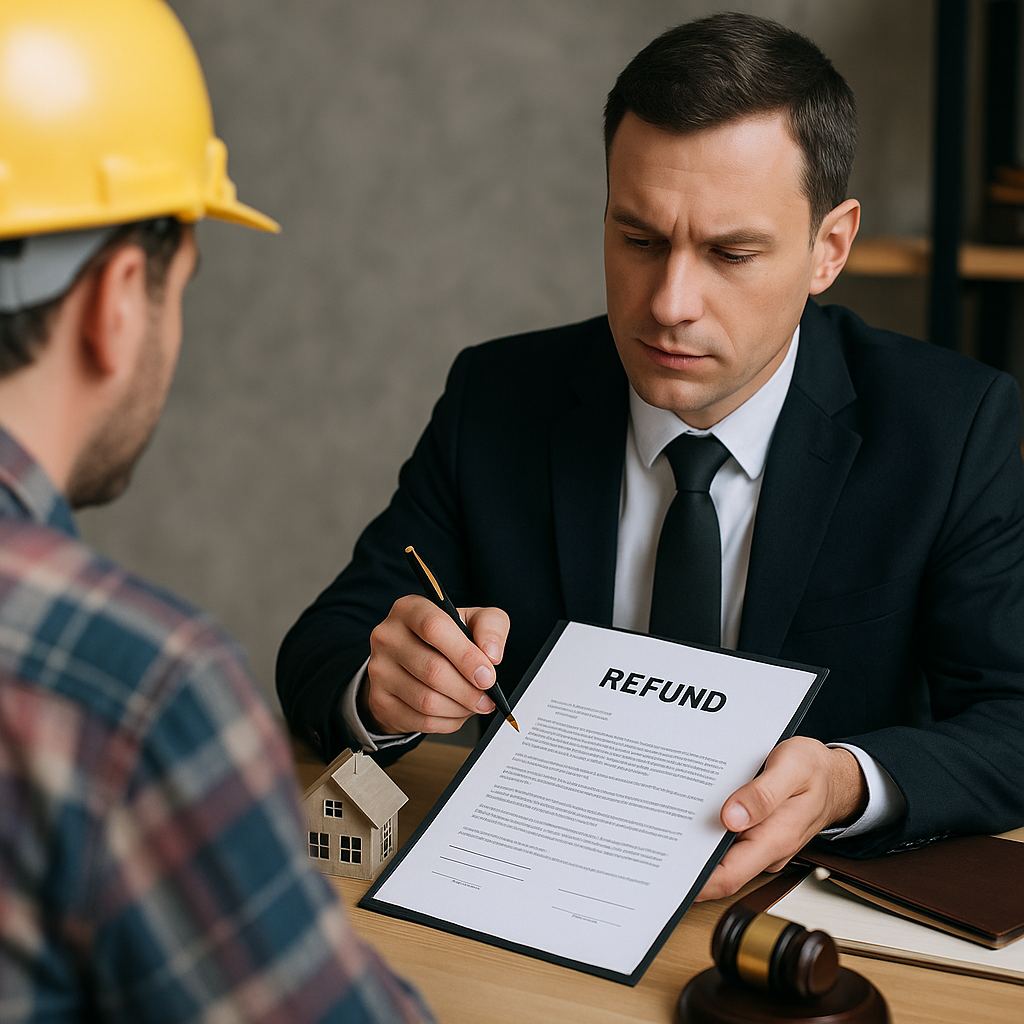
Why Builder Refund Clauses Can Make or Break Your Property Deal
Just imagine you’ve saved for years, booked your dream flat, and suddenly the builder delays possession by months – or worse, cancels the project. You ask for a refund. The builder points to a clause in your agreement. The words look English, but the meaning is slippery. Will you get your money back? When? With interest? In India, builder refund clauses decide the answer, not the builder’s mood or your lawyer’s voice.
Many buyers only notice this clause when things go wrong. By then, it’s usually too late. If you’re buying property, or stuck in a builder-buyer dispute, understanding this legal language isn’t optional. It’s the difference between a fair refund and endless headaches. With RERA, property disputes, and fraud risks rising, knowing your rights (and their limits) is practical, not just academic.
I’ve seen families lose lakhs simply because they didn’t read that one paragraph carefully. It’s not just legalese. It’s your money and peace of mind.
Quick Answer: What Are Builder Refund Clauses and Why Do They Matter?
Builder refund clauses are specific sections in property agreements that define if, when, and how a buyer can claim a refund from the builder – usually for delays, cancellations, or broken promises. The exact wording determines your rights, refund timelines, and compensation. Poorly written clauses can block or delay your refund, so always review them with a real estate lawyer before signing.
What Exactly Are Builder Refund Clauses?
Builder refund clauses are legal terms in your sale agreement or builder-buyer contract. They spell out the builder’s obligation to return your money if certain events occur – like project delays, non-delivery, or major changes in plans. The clause isn’t just a formality. It is the main tool for resolving Refund from Builder disputes in India.
Key Elements in a Refund Clause
Most refund clauses answer these questions:
- Under what conditions can the buyer demand a refund? (e.g., delay beyond X months, project cancellation, major deviation from approved plans)
- What is the refund amount? (full, partial, with or without interest)
- What is the timeline for payment? (30, 60, 90 days, etc.)
- Will interest be paid? At what rate?
- What is the process for making a claim? (written notice, documentation, etc.)
In India, the Real Estate (Regulation and Development) Act, 2016 (RERA) made it mandatory for refund terms to be clearly stated. But not all agreements are RERA-compliant, especially for older projects or those outside RERA’s jurisdiction.
Common Types of Refund Clauses
Some typical refund triggers seen in Indian builder-buyer agreements:
- Delay in possession beyond a fixed date (often 6-12 months grace period)
- Cancellation of project by builder
- Failure to obtain necessary approvals (environmental, municipal, RERA registration)
- Major changes in layout, amenities, or flat size
- Buyer’s own cancellation (usually with heavy deductions)
Not all clauses are fair. Some builders add vague or one-sided terms to avoid paying refunds or to delay them endlessly. That’s where legal advice and careful reading matter.
Why Legal Language in Refund Clauses Matters So Much
Legal language isn’t just boring jargon. In refund clauses, a single word can decide lakhs of rupees. Builders often use technical or ambiguous terms to protect themselves, not buyers.
How Wording Changes Everything
Let’s compare two refund clauses:
| Clause A | Clause B |
|---|---|
| “If possession is delayed by more than 6 months, the builder shall refund all payments received from the buyer within 90 days, along with 10% annual interest.” | “In case of unforeseen delays, the builder may, at its discretion, offer refund within a reasonable time, subject to deductions as deemed fit.” |
Clause A is clear, time-bound, and includes interest. Clause B is vague, gives all power to the builder, and mentions deductions without limits. If you sign Clause B, you might wait years or accept a reduced refund with no recourse.
Hidden Pitfalls in Legal Drafting
- Ambiguous timelines: “Reasonable time” or “best efforts” means nothing specific. Builders use such words to avoid hard deadlines.
- Discretionary language: Words like “may,” “at builder’s discretion,” or “subject to” shift power from buyer to builder.
- Deductions and forfeitures: Some clauses let builders deduct arbitrary sums for “administrative charges,” “marketing expenses,” or “cancellation fees.”
- Interest rate games: If the clause is silent on interest, you may get only your principal back, even after years.
A real estate lawyer can spot these traps instantly. But most buyers don’t consult one until something goes wrong. That’s a mistake.
RERA’s Role and Limitations
RERA made refund clauses more standard in new agreements. But many builders still try to sidestep strict timelines or interest payments. And RERA’s reach is limited for projects launched before 2017 or for certain types of land.
How Builder Refund Clauses Work in Real Life
On paper, refund clauses look simple. In reality, getting your money back from a builder can be a marathon. Here’s how the process usually unfolds:
Step-by-Step: Typical Refund Process
- Buyer discovers a trigger event (delay, cancellation, etc.).
- Buyer sends a formal written notice or legal notice demanding refund, quoting the refund clause.
- Builder responds – sometimes with a counter-offer, sometimes with silence.
- If builder agrees, refund is processed as per contract (often after negotiation).
- If builder refuses, buyer files a complaint with RERA, consumer court, or civil court.
- Case is heard, both sides present their contract and evidence.
- Court or authority issues an order for refund, sometimes with interest.
- Builder complies (sometimes after more legal pressure).
Common Delays and Disputes
- Builders claim “force majeure” (unforeseen events) to escape timelines.
- Refunds are offered without interest, or with heavy deductions.
- Buyers are pushed into accepting alternative flats or delayed possession instead of refund.
- Some builders simply don’t respond until legal action is threatened.
Real-World Example
Ms. Sharma booked a flat in Noida in 2015. The builder promised possession by 2018. By 2021, the tower was still half-built. The agreement said, “builder shall refund with 9% interest if delay exceeds 12 months.” After several notices, the builder offered only the principal, citing “market slowdown.” She filed a complaint with UP RERA. After 8 months, the RERA authority ordered full refund plus interest. But the builder delayed payment for another 6 months, requiring court enforcement.
This isn’t rare. Many buyers face similar hurdles, especially with older agreements or smaller builders.
Key Mistakes Buyers Make with Builder Refund Clauses
Most refund disputes start with a badly drafted agreement or blind trust in the builder’s word. Here’s what goes wrong:
Overlooking the Clause Entirely
Many buyers focus on price, location, and brochure promises. The refund clause is buried on page 17, in small print. They assume, “It’ll be fine, everyone gets their money back if things go wrong.” That’s wishful thinking.
Trusting Verbal Promises
Builders often say, “Don’t worry, full refund if delayed.” But only what’s written in the agreement counts. Courts don’t enforce oral promises unless you have solid proof.
Not Checking for RERA Compliance
RERA requires clear refund timelines and interest. But many agreements are still non-compliant. If your agreement is silent or vague, courts may still apply RERA rules, but it becomes a legal battle.
Ignoring Deductions and Penalties
Some clauses allow builders to deduct lakhs for “cancellation” or “administrative” charges. If you don’t spot these before signing, you may lose a big chunk of your refund.
Missing Deadlines
Some agreements set strict timelines for claiming a refund. If you wait too long or miss a notice period, you might lose your right to claim.
Best Practices: How to Protect Yourself Before and After Signing
You don’t need to be a lawyer, but you do need to be careful. Here’s how to avoid refund nightmares:
Before Signing the Agreement
- Read the refund clause word by word. Don’t skip it.
- Ask for a plain English explanation from a real estate lawyer or RERA consultant.
- Compare the clause with RERA standards for your state.
- Negotiate for clear, buyer-friendly terms: fixed refund timeline, fair interest, no vague deductions.
- Get all changes in writing, signed by both parties.
After Signing / If a Dispute Arises
- Keep all payment records, receipts, and communication with the builder.
- If you suspect a delay or fraud, send a formal notice quickly.
- Consult a RERA lawyer or property legal advice service for next steps.
- File a complaint with RERA or consumer court if builder refuses a fair refund.
- Don’t accept verbal settlements or “credit notes” unless you’re satisfied with the terms.
Red Flags in Refund Clauses
Watch out for these:
- “At builder’s discretion” or “subject to force majeure.”
- No mention of interest, or interest below bank FD rates (less than 6-7%).
- Vague timelines (“reasonable time,” “as soon as possible”).
- Heavy deductions for “processing” or “marketing.”
RERA Legal Services and Their Role in Builder Refund Disputes
RERA (Real Estate Regulatory Authority) was a big change for Indian homebuyers. It made refund rights clearer and gave buyers a faster forum for complaints. But RERA isn’t magic. Here’s what it really does:
How RERA Protects Buyers
- Mandates that all new agreements specify refund terms, timelines, and interest.
- Allows buyers to file complaints online for refund, delay, or fraud.
- RERA authorities can order refunds with interest and penalise builders for non-compliance.
- Proceedings are usually faster than civil courts (3-6 months, but sometimes longer).
- RERA orders can be enforced through revenue authorities if builder refuses to pay.
Where RERA Falls Short
- Projects launched before May 2017 may not be fully covered.
- Some states have weaker RERA enforcement (UP, Haryana are better, but delays still happen).
- Builders may file appeals to delay refunds further.
- RERA doesn’t cover all types of land or redevelopment projects.
When to Use RERA Legal Services
- If your agreement is RERA-registered and builder isn’t refunding as per clause.
- If you need fast, cost-effective resolution (RERA is cheaper than civil court).
- If you want to avoid lengthy traditional litigation.
A good RERA lawyer or property fraud lawyer can draft your complaint, represent you, and push for enforcement. Don’t rely on builder’s promises or middlemen.
Builder Refund Clauses in Sale Deed and Other Property Agreements
Builder refund clauses aren’t just in the main builder-buyer agreement. They can also appear in:
- Sale deed: Final transfer document, sometimes includes refund terms for last-minute issues.
- Allotment letter: Early-stage commitment, may specify refund if builder fails to deliver flat.
- Construction agreement: For self-build or plotted developments, refund triggers for non-completion.
How Refund Terms Differ by Document
- Allotment letter: Usually less detailed, but sets the basic refund trigger (e.g., if builder can’t deliver flat, refund within 90 days).
- Agreement for sale: Most detailed, covers all refund scenarios, timelines, and interest.
- Sale deed: Mainly for final handover, rarely invoked for refunds unless there’s last-minute fraud or title issue.
If you’re buying a resale flat or entering at a later stage, check all documents for refund clauses. Don’t assume they’re all the same.
Comparing Builder Refund Clauses: India vs Global Practices
Indian builder refund clauses are stricter now due to RERA, but still not as buyer-friendly as in some countries. Here’s a quick comparison:
| Country | Typical Refund Rights | Interest Paid | Enforcement |
|---|---|---|---|
| India | Refunds for delay, cancellation; interest as per agreement or RERA | 6 – 10% (often delayed) | RERA, consumer courts, civil courts |
| Singapore | Refunds for delays beyond 6 months; strict penalties | 8 – 12% | Strong regulatory enforcement |
| UK | Full refund for major delay/cancellation; some compensation | Bank base rate + 1 – 2% | Ombudsman, courts |
| UAE | Refunds only for major breaches; less buyer-friendly | Often no interest | RERA Dubai, courts |
Indian buyers still face more hurdles and delays, but things are improving post-RERA. But you must insist on clear, written clauses and know your legal options.
Trends and Future Outlook for Builder Refund Clauses in India
Things are changing fast. Here’s what’s new and what’s coming:
Recent Developments
- RERA authorities are cracking down on builders who delay refunds or avoid paying interest.
- More states are updating their RERA rules to set minimum interest rates for refunds (often SBI MCLR + 2%).
- Courts are increasingly siding with buyers, even in older agreements, if the builder acted unfairly.
- Digital filing of complaints is making the process faster, especially in big cities.
What to Expect in the Next Few Years
- Stricter refund timelines in new agreements (30 – 60 days, not 6 months)
- Higher interest rates for delayed refunds, matching or exceeding FD rates
- More use of escrow accounts to protect buyer payments (already seen in Maharashtra, Karnataka)
- Better enforcement tools – builders who delay refunds may face property attachment or blacklisting
- Rise of legal-tech startups offering instant document review and RERA complaint filing
Don’t wait for the law to catch up. Insist on strong refund clauses now, and use expert legal help if you’re unsure.
Frequently Asked Questions
What is a builder refund clause in a property agreement?
A builder refund clause is a contractual provision that sets out when and how a buyer can claim a refund from the builder, including timelines, interest, and conditions. It is a key part of builder-buyer agreements in India, especially after RERA.
How do I claim a refund from a builder for project delay?
To claim a refund, send a formal written notice to the builder quoting the refund clause. If the builder refuses or delays, file a complaint with your state RERA authority or consumer court. Keep all payment records and agreement copies ready.
What should a fair builder refund clause include?
A fair refund clause should specify: (1) clear trigger events (delay, cancellation), (2) fixed refund timeline (e.g., 60 days), (3) interest rate (usually 6 – 10%), (4) no arbitrary deductions, and (5) written process for claims.
Can a builder refuse to pay interest on refunds?
If your agreement or RERA rules specify interest, the builder must pay it. If the clause is silent, courts often award interest based on prevailing rates (like SBI MCLR). Always insist on written mention of interest in your agreement.
Is RERA applicable to old projects for refunds?
RERA mainly covers projects registered after May 2017, but some states apply RERA rules to older projects if the issue is ongoing. Check your state’s RERA website or consult a RERA lawyer for clarity.
What is the process for filing a refund complaint with RERA?
- Gather all documents (agreement, payment proofs, correspondence).
- Draft a complaint citing the refund clause and RERA sections.
- File online or at the RERA office with a small fee.
- Attend hearings and submit evidence.
- RERA authority issues an order for refund if justified.
Can builders deduct charges from my refund?
Only if your agreement allows specific deductions (like statutory taxes or documented costs). Vague terms like “processing charges” can be challenged. RERA discourages arbitrary deductions.
What if the builder ignores the RERA refund order?
You can apply to the RERA authority for enforcement, which may include property attachment or penalties. In extreme cases, file for execution in civil court.
How long does it take to get a refund from a builder?
With a clear clause and builder cooperation, refunds may take 30 – 90 days. If legal action is needed, it can take 6 months to 2 years, depending on the forum and builder’s response.
Are refund clauses the same in all property agreements?
No, refund clauses vary widely by builder, project, and state. Always read your specific agreement, and compare with RERA standards for your area.
What interest rate should I expect on builder refunds?
RERA recommends SBI MCLR + 2% (about 8 – 10%), but your agreement may specify higher or lower. Insist on a written rate matching current bank FD rates at minimum.
Can I get a refund if I cancel the booking for personal reasons?
Most agreements allow cancellation by buyer, but usually with deductions for administrative or marketing charges. The exact amount depends on the terms in your contract.
Who can help me with a builder refund dispute?
Consult a real estate lawyer, RERA lawyer, or property legal advice service. Many legal-tech platforms also offer quick document review and complaint drafting.
Do I need to go to court for builder refund disputes?
Not always. RERA and consumer forums offer faster, less expensive options. Court is a last resort if other forums fail.
What documents are needed to claim a refund from a builder?
You’ll need your signed agreement, payment receipts, allotment letter, correspondence with builder, and any notices sent. Keep everything organised for quick action.
Key Takeaways
- Builder refund clauses decide if, when, and how you get your money back from a builder.
- Always read refund terms carefully, not just price and layout.
- RERA makes refund rights clearer, but old agreements can still trap buyers.
- Legal language matters – a single word can cost you lakhs.
- Insist on written, clear, time-bound refund clauses with fair interest rates.
- Avoid agreements with vague terms or heavy deductions.
- Use RERA or consumer forums for faster dispute resolution.
- Document everything – payments, notices, builder replies.
- Consult a real estate lawyer or RERA expert before signing.
- Don’t trust verbal promises; only written clauses count.
Conclusion
Builder refund clauses aren’t just legal footnotes. They’re your safety net against project delays, cancellations, and builder defaults. In India’s fast-changing property market, a strong refund clause is your best shield against financial loss and stress.
If you’re buying a flat or facing a builder-buyer dispute, don’t skip the fine print. Get the refund clause reviewed by an expert, ask questions, and insist on clear terms. The right legal language today can save you years of regret later.
